Why Marriage Feels Optional (or Even Terrifying)
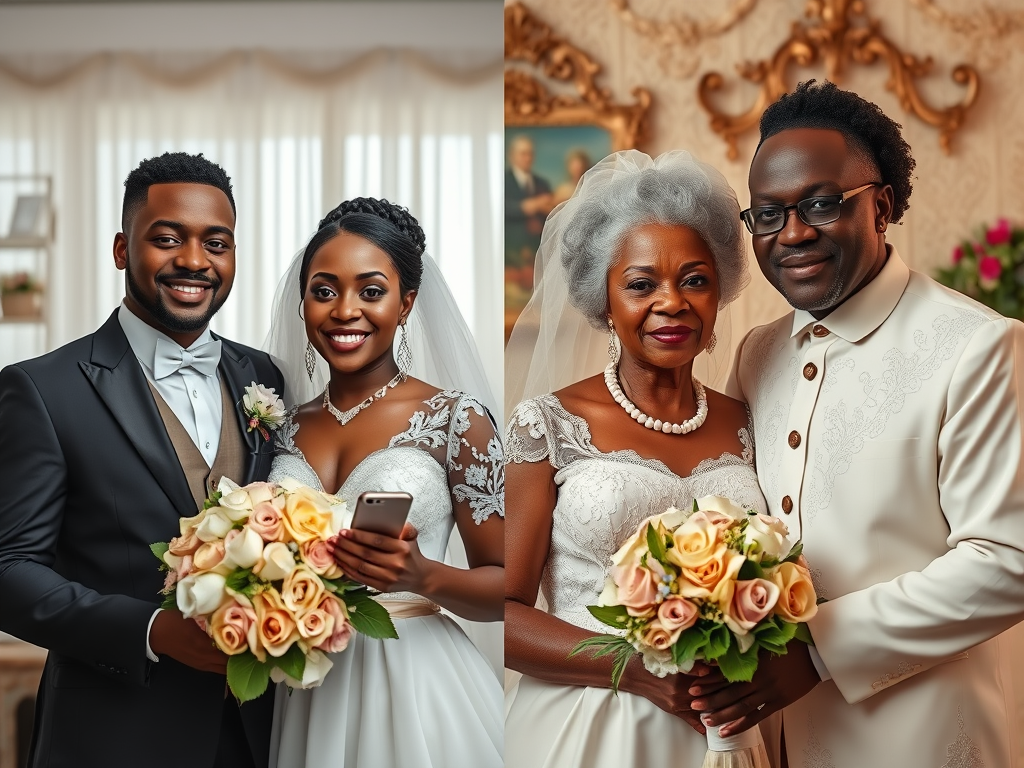
Commitment used to be the dream.
Now it’s the debate.
For many Millennials and Gen Z adults, the idea of marriage no longer holds the same urgency or universal appeal it once did. Where our grandparents may have married young and stayed for life, today we swipe, ghost, pause, loop, “soft launch,” and sometimes walk away without blinking. For some, marriage feels unnecessary. For others, it feels unattainable.
And for many more, it feels terrifying.
But is this really about commitment? Or is it about everything we’ve lived through—economically, emotionally, and socially?
Let’s unpack what’s really going on beneath the surface of this so-called “commitment-phobic generation.”
1. Trust Issues: We’ve Seen Too Much
Let’s be real: a lot of us didn’t grow up watching love thrive.
We grew up in the era of high divorce rates, single-parent households, or couples staying together “for the kids” while living like distant roommates. Many of us saw infidelity, emotional neglect, or manipulation behind closed doors. Love didn’t look safe—it looked exhausting.
Our parents’ generation often stayed together in spite of their children—not always for them.
They stayed even when they were unhappy, unfulfilled, or unwell. Marriage was a contract, a duty, a tradition that was rarely questioned—regardless of how many hearts were quietly breaking behind closed doors.
Our generation? We’re not doing that.
We’re leaving.
We’re prioritizing peace, mental health, and wholeness—even if it means doing it solo.
We believe children deserve to see what love looks like, not just hear it repeated in a tense household. We want them to see joy, not just endurance.
So yes, we walk away when it hurts too much. Not because we don’t value commitment—but because we value healthy commitment.
2. Money Issues: Love Can’t Pay the Bills
For generations before us, marriage was often linked to economic security. Two incomes. Shared assets. A clear ladder of progress: marriage → house → kids → retirement.
Today? Not so simple.
- Student loans are crushing.
- Home ownership feels out of reach.
- Job security is fleeting.
- Inflation is outpacing salaries.
- We’re still healing from the 2008 financial crisis and the economic fallout from COVID-19.
Many young adults are asking:
How can I afford marriage when I can barely afford rent?
Why would I tie my finances to someone else when I’m still digging myself out of debt?
And let’s not forget: financial trauma from past relationships plays a huge role. Some people were left to clean up a partner’s mess. Others were raised in households where money was weaponized—used to control or manipulate.
When love and money clash, love doesn’t always win. And many of us learned to protect our wallets before we protected our hearts.
3. Educational Pressure and Personal Development: We Want More First
Today’s generation is more educated than any before it—and that’s a beautiful thing. But it also means many of us are in school longer, delaying milestones like marriage, children, and homeownership.
There’s also a new cultural priority: self-development.
We want to:
- Heal from generational trauma
- Travel
- Build businesses
- Earn degrees
- Discover our passions
- Explore our identity
- Go to therapy (thank God)
- Become whole before we partner
There’s a collective belief now: I don’t want to lose myself in love.
We saw too many people disappear into relationships—sacrificing dreams, autonomy, and purpose for a title. We don’t want to get married just to say we did it. We want it to feel right, aligned, and evolved.
And that takes time.
So… Are We Really Commitment-Phobic?
Not exactly.
Many of us do crave commitment—we just want it to be healthy, stable, and mutual. The fear isn’t in committing, it’s in committing to the wrong person, at the wrong time, for the wrong reasons.
We are cautious, yes. Guarded, absolutely. But we’re also reflective, intentional, and emotionally self-aware in ways previous generations often weren’t allowed to be.
What We Need Instead of Shame
What we need isn’t to be shamed for not rushing down the aisle.
What we need is space to:
- Ask deeper questions.
Not “when are you getting married?” but “what kind of partnership do you want?” - Redefine success.
For some, it’s marriage. For others, it’s a long-term partnership with no paper involved. And for many, it’s solitude while healing. - Release the timeline.
You’re not behind because you’re not married by 30. You’re evolving—and that takes as long as it takes. - Get honest about the real fears.
Trust. Finances. Trauma. Identity. Compatibility. It’s not “commitment-phobia.” It’s real-life complexity.
Final Thoughts: Love, on Our Own Terms
Marriage isn’t dead. But the fairytale is.
And maybe that’s a good thing. Because now, we have room to write new love stories—ones that make room for healing, growth, and truth.
We’re not afraid of love. We’re afraid of losing ourselves in it.
But what if love didn’t mean shrinking?
What if it meant expanding—together?
 Ayana Brianne.
Leave a comment